
CIN 1: Mild Abnormalities, What Now?
It is very understandable that you don't want to just wait and see. CIN 1 means superficial abnormalities, and in many women, this heals spontaneously. But that doesn't mean you have to wait powerlessly.
What is CIN 1?
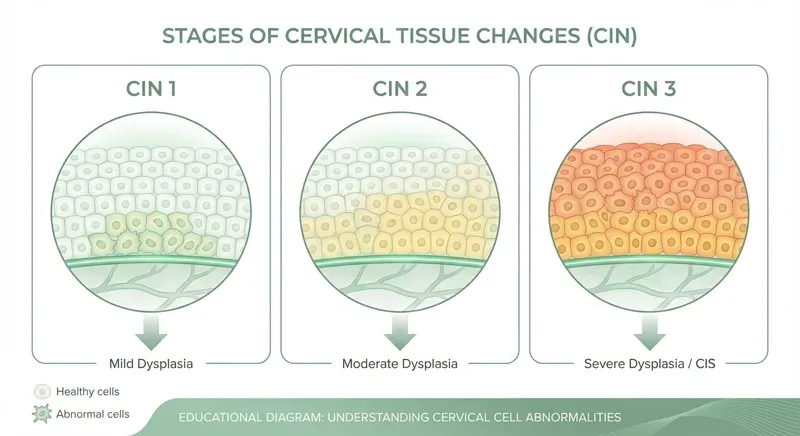
CIN stands for Cervical Intraepithelial Neoplasia. CIN 1 means that mild, superficial abnormalities have been found in the cells of your cervix. The HPV virus has caused changes in the lower third of the mucosal lining (epithelium).
Important to know: CIN 1 is not cancer and is also not a direct precursor to cancer. It is an expression of an active HPV infection. Your body is trying to clear the virus, and for many women, it succeeds. However, in some women, the virus persists and the abnormalities can worsen.
CIN 1 is diagnosed through a biopsy (tissue examination) by the gynecologist, usually after an abnormal smear test (PAP 3a). The gynecologist examines the cervix with a colposcope and takes a small sample of tissue for analysis.
Chance of Spontaneous Recovery
of CIN 1 abnormalities recover spontaneously within 2 years, provided the immune system is functioning well and there are no risk factors.
Bron: NHS Cervical Screening Programme
This is the good news: the majority of CIN 1 abnormalities go away on their own. Your body has the capacity to clear both the abnormal cells and the HPV virus. The gynecologist therefore often advises a 'watchful waiting' policy with a follow-up after 6 to 12 months.
But this statistic doesn't tell the whole story. The chance of spontaneous recovery depends heavily on your individual situation. In a persistent HPV infection, when the virus is present for longer than 12 to 24 months, the chance of spontaneous recovery decreases significantly. And with certain risk factors, CIN 1 can actually progress to CIN 2 or CIN 3.
When Does It Get Worse? Risk Factors
Not every CIN 1 case is equal. There are factors that increase the chance of progression (worsening) and decrease the chance of spontaneous recovery:
- Persistent HPV Infection: If the virus is present for longer than 1-2 years, the chance that your body will clear it on its own decreases. This is the most important risk factor.
- HPV type 16 or 18: These high-risk types are more aggressive and have a higher chance of progression than other HPV types.
- Smoking: Smoke substances (nicotine and cotinine) accumulate in the cervical mucus and weaken local defenses. Smoking doubles the risk of progression.
- Birth Control Pill: Long-term pill use (more than 5 years) appears to be associated with an increased risk. The pill influences the hormonal balance.
- Weakened Immune System: Due to stress, lack of sleep, nutritional deficiencies, or medication (such as immunosuppressants).
- Co-infections: Disrupted pH balance and vaginal infections can weaken local immunity.
If one or more of these factors apply to you, you can, alongside your gynecologist's policy, also work on addressing risk factors yourself. The check-ups with your gynecologist remain leading.
What Can You Do Yourself? A Concrete Action Plan
The fact that the gynecologist advises 'waiting' does not mean you cannot do anything. There are concrete steps you can take today to support your immune system. The progression of the abnormal cells is monitored by your gynecologist.
Your action plan for CIN 1
Quit smoking
This is the most impactful step. Smoking directly weakens the local defense of the cervix. Quitting smoking can significantly increase the chance of recovery.
Reconsider the birth control pill and other contraceptives
Strengthen your immune system through nutrition
Eat cruciferous vegetables daily (broccoli, cauliflower, kale), ensure sufficient folic acid, vitamin C, zinc, and selenium. Avoid processed food and sugar.
Targeted supplements
We consider micro-immunotherapy, supplements, and special natural vaginal suppositories. For this, we create a personal plan after a telephone consultation.
Reduce stress
Chronic stress suppresses the immune response. Invest in sleep, exercise, and relaxation. This is not a luxury but a medical necessity.
Consider additional treatment
The escharotic treatment can selectively remove abnormal cells without scar tissue. This is particularly suitable for CIN 1.
Do you want a personal plan for CIN 1?
During an intake interview, we map out your entire situation and put together a customized treatment plan. This includes lifestyle advice, supplements, and potentially escharotic treatment.
Schedule an intakeThe HPV Health approach to CIN 1
At HPV Health, we combine multiple approaches to best support your body in clearing HPV and repairing abnormal cells:
- Comprehensive HPV test: We determine which HPV type you have and measure the viral load.
- Lifestyle and nutrition advice: Focused on strengthening your immune system and removing risk factors.
- Supplement protocol: Evidence-based supplements tailored to your situation.
- Escharotic treatment: When indicated, we treat the abnormal cells locally on the cervix.
- Monitoring: Regular check-ups via imaging, HPV testing, and smear tests.
We always work complementary to regular care. Your gynecologist remains your primary practitioner. Our goal is to support your body in the recovery process, alongside the check-ups with your gynecologist.
Escharotic Treatment for CIN 1
For CIN 1, escharotic treatment can be considered as a complement, alongside your gynecologist's watchful waiting policy. The abnormalities are still superficial and limited to the lower third of the epithelium. The tincture can selectively remove these cells.
Advantages of escharotic treatment for CIN 1:
- No scar tissue: Unlike a LEEP procedure, the treatment leaves no scars on the cervix. This is particularly important for women wishing to conceive.
- Selective: Only abnormal cells are treated, healthy tissue remains intact.
- Limited recovery time: Most women can usually resume their normal activities relatively quickly. This may vary from person to person.
- Supporting yourself actively: Alongside your gynecologist's watchful waiting policy, you can support your immune system.
The treatment is performed by a BIG-registered doctor or under the supervision of the practice assistant and is combined with strengthening your immune system as part of the approach.
Veelgestelde vragen
How often should I have a check-up for CIN 1?
Can CIN 1 worsen to CIN 2 or CIN 3?
How long does it take for CIN 1 to go away?
Can I get pregnant with CIN 1?
Is CIN 1 contagious?
Ready for the next step?
Schedule an intake and discover which holistic treatment suits you best.
Schedule an intake