
Boosting the Immune System for HPV
Your immune system is the key to clearing HPV. More than 90% of all HPV infections are cleared by the body's own defense system. With the right nutrition, supplements, and lifestyle, you can actively support this process.
Why is the immune system crucial for HPV?
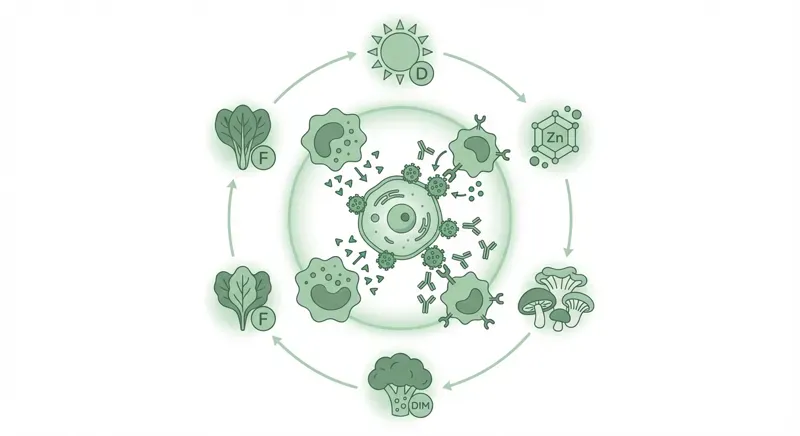
HPV (human papillomavirus) is a virus that can be cleared by your own immune system. The virus settles in the superficial cells of the cervix and tries to hide from your defenses. When your immune system functions well, it recognizes the infected cells and clears them.
The main players in this process are T-lymphocytes (T-cells). These are specialized white blood cells that recognize and destroy infected cells. There are two types that are particularly important for HPV:
- Cytotoxic T-cells (CD8+): These cells recognize the viral proteins E6 and E7 on the surface of infected cells and destroy these cells directly.
- Helper T-cells (CD4+): These cells coordinate the immune response and activate other defense cells. They are essential for an effective fight against HPV.
When the immune system is weakened (by stress, poor nutrition, smoking, or genetic factors), the virus has the chance to persist longer, and abnormal cells can develop (CIN 1, 2, or 3). Strengthening your immune system is therefore an essential part of any HPV treatment.
of all HPV infections are cleared by the body's own immune system within 1-2 years. The goal is to support your defenses as best as possible.
Bron: RIVM / WHO
Nutrition for HPV
Nutrition plays a direct role in the function of your immune system. Certain nutrients have been specifically researched in relation to HPV clearance and the prevention of cellular abnormalities.
DIM and I3C: the power of cruciferous vegetables
DIM (di-indolylmethane) and I3C (indole-3-carbinol) are substances naturally found in cruciferous vegetables such as broccoli, cauliflower, kale, and Brussels sprouts. These substances support estrogen metabolism: they help your body convert estrogen into the protective variant (2-OH-estrone) instead of the harmful variant (16-OH-estrone).
This can be relevant for HPV because research suggests that the viral protein E7 has a relationship with estrogen. Estrogen metabolism could play a role here, although the evidence for this is still limited.
Folic acid
A folic acid deficiency is associated with an increased risk of cervical abnormalities. Folic acid is essential for DNA repair and cell division. Note: in the case of an MTHFR mutation (which occurs in approximately 45% of the population), the active form methylfolate (5-MTHF) is recommended instead of regular folic acid.
Eat daily
- At least 200g of cruciferous vegetables (broccoli, cauliflower, kale)
- Colorful fruits and vegetables (vitamin C and antioxidants)
- Fatty fish, nuts, and seeds (omega-3, selenium, zinc)
- Green leafy vegetables (folic acid)
Key supplements for HPV
In addition to nutrition, targeted supplements can provide extra support for the immune system. Below are the most important supplements for HPV, based on scientific research. Do not start taking various vitamins on your own; always do this in consultation with an orthomolecular physician. Various factors are influential, such as medication, conditions affecting the immune system, and the way your body absorbs and processes vitamins.
Supplements for HPV: overview
| Supplement | Dosage | Researched role | Evidence |
|---|---|---|---|
| AHCC | Dosage in consultation | Researched in relation to NK-cells and T-cells | Assessed more favorably than placebo for HPV clearance in research |
| Vitamin C | Dosage in consultation | Researched as an antioxidant supporting immune cells | Associated with cervical health in research |
| Folic acid (methylfolate) | Dosage in consultation | Involved in DNA repair and cell division | Deficiency associated with CIN risk in research |
| DIM | Dosage in consultation | Researched in relation to estrogen metabolism | Researched in relation to the 2-OH/16-OH ratio |
| EGCG (green tea) | Dosage in consultation | Researched in relation to E6/E7 | Limited research in CIN 1-2 |
| Vitamin D | Dosage in consultation | Researched in relation to T-cells | Deficiency associated with HPV persistence in research |
| Zinc | Dosage in consultation | Involved in T-cell function | Deficiency associated with a weaker immune response in research |
AHCC: the most researched supplement for HPV
AHCC (Active Hexose Correlated Compound) is an extract from shiitake mushrooms. It is the most researched supplement specifically for HPV. In a randomized, double-blind, placebo-controlled study, the group taking AHCC did better than the placebo group in terms of HPV clearance. This concerns research; results can vary per person and are not a promise. AHCC is a dietary supplement, not a registered medicine, and not a replacement for regular care.
AHCC has been researched in relation to the activation of NK cells (natural killer cells) and T-lymphocytes, which play a role in the immune system's recognition of the HPV virus.
Important: no self-medication
It is essential to tailor supplements to your individual situation. Not every supplement is suitable for everyone, and dosages must be carefully determined. At HPV Health, we create a personalized supplement plan after blood testing and medical history intake.
Lifestyle: the foundation of your defense
Supplements and nutrition are important, but the foundation of a strong immune system lies in your daily lifestyle. Three factors are crucial:
The three pillars of a strong defense
Sleep: 7-9 hours per night
During sleep, your body produces cytokines, proteins that are essential for the immune response. Chronic sleep deprivation reduces the number of T-cells and makes you more susceptible to viral infections. Try to maintain a consistent sleep schedule and avoid screens before bed.
Stress: actively reducing it
Chronic stress increases cortisol levels, which directly suppresses the production of T-cells. Research shows that chronic stress significantly increases the chance of HPV persistence. Consider mindfulness, breathing exercises, yoga, or walking in nature.
Exercise: at least 150 minutes per week
Regular moderate exercise stimulates the circulation of immune cells through your body. This increases the chance that T-cells encounter and destroy infected cells. Excessive intensive sports can actually temporarily suppress the immune system.
Quitting smoking
Smoking is one of the most significant risk factors for HPV. Smoking increases the risk of CIN 3 by a factor of 2.5, directly affects the T-cells in the cervix, and lowers folic acid levels. Quitting smoking is one of the most effective steps you can take.
Personalized plan for your immune system
At HPV Health, we create a personalized plan with targeted supplements, nutritional advice, and lifestyle adjustments after blood testing and an extensive intake. Everything is tailored to your specific situation.
Schedule an intakeVeelgestelde vragen
Can I cure HPV just by strengthening my immune system?
How long does it take for supplements to have an effect?
Can I combine supplements with conventional treatments?
Is AHCC safe to take?
How do I know which supplements I need?
Ready for the next step?
Schedule an intake and discover which holistic treatment suits you best.
Schedule an intake