
HPV treatment: overview of all options
There are several treatments possible for HPV and abnormal cells. From conventional procedures to complementary approaches: here you will find an honest overview of all options, including effectiveness and who they are suitable for.
Conventional and complementary treatments
In the treatment of HPV and abnormal cells (CIN), both conventional and complementary treatments exist. Conventional treatments focus on removing abnormal cells, while complementary treatments focus on supporting the immune system and treating the local tissue.
At HPV Health, we focus on supporting the body. In the early stages of CIN 1 and CIN 2, alongside regular monitoring, we can provide complementary support by supporting the immune system and treating the local tissue. A LEEP procedure removes abnormal cells, but in 10-25% of cases, abnormal cells and/or HPV viruses remain and the abnormality returns.
Below you will find an overview of the most important treatment options, with honest information about effectiveness, pros, and cons.
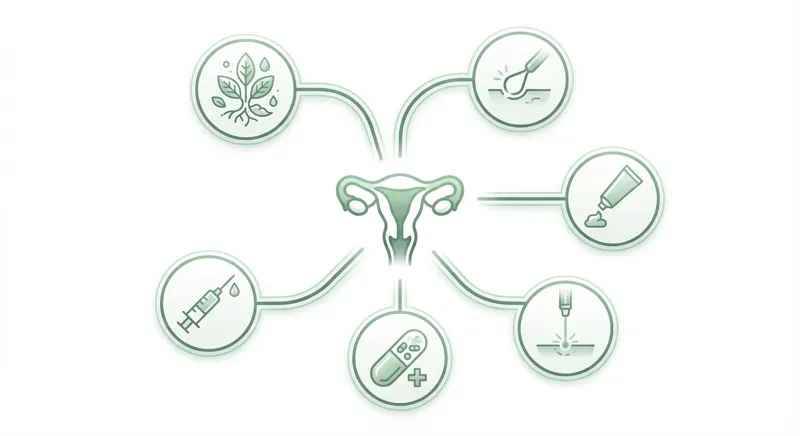
All treatments at a glance
Click on a treatment for more information.
LEEP procedure / conization
Conventional surgical removal of abnormal cells. Effectiveness ~75-90%.
Imiquimod cream
Conventional immune-stimulating cream. Effectiveness ~50-60%.
Escharotic treatment
Local treatment of the tissue, usually without scar tissue.
Immune system strengthening
Supplements, nutrition, and lifestyle to strengthen your own defense.
Low Level Laser Therapy (LLLT)
Cold vaginal laser therapy for cellular recovery.
HPV vaccination therapy
Therapeutic vaccination focused on HPV type 16. Research phase.
Treatments compared
| Treatment | Type | Effectiveness | Side effects | Suitable for |
|---|---|---|---|---|
| LEEP procedure / conization | Conventional | ~75-90% | Scar tissue, risk of premature birth | CIN 2-3 |
| Imiquimod cream | Conventional | ~50-60% | Fatigue, nausea | CIN 2-3, desire to have children |
| Escharotic treatment | HPV Health | Complementary (effect varies per person)* | Usually mild | CIN 1-2 |
| Immune system strengthening | Complementary | Supportive | Usually mild | All stages |
| LLLT laser therapy | HPV Health | Complementary (effect varies per person)* | Usually mild | CIN 1-2 |
| HPV vaccination therapy | Experimental | 15-36% for CIN 2/3 | Minimal | HPV 16 positive |
* Escharotic treatment and LLLT are used in a complementary way. For these treatments, large-scale scientific evidence (randomized studies) is not yet available. The effect can vary per person.
LEEP procedure and conization (conventional)
A LEEP procedure (also called LLETZ) is the most common conventional treatment for CIN 2 and CIN 3. During this procedure, a small piece of tissue from the cervix is removed with an electrical loop under local anesthesia.
For whom?
- Women with CIN 2 or CIN 3 (moderate to severe abnormalities)
- When waiting is no longer responsible according to the gynecologist
Effectiveness
The LEEP procedure is effective: in approximately 75-90% of women, the abnormal cells have disappeared after the procedure. However, the underlying HPV virus is not always addressed. In 10-25% of women, the abnormalities return because the virus may still be present.
Disadvantages
- Scar tissue on the cervix
- For those wishing to conceive: increased risk of premature birth in future pregnancies (depending on how much tissue was removed)
- The HPV virus is not treated
Imiquimod cream (conventional)
Imiquimod (Aldara) is an immune-stimulating cream applied locally to the cervix. The cream activates the local immune system, helping the body fight the abnormal cells itself.
For whom?
- Women with CIN 2 or CIN 3 who want to avoid a LEEP procedure
- Particularly interesting for those wishing to conceive (no scar tissue)
Effectiveness
Studies show an effectiveness of 50-60% for CIN 2-3. This is lower than a LEEP procedure, but the major advantage is that no tissue is removed and no scar tissue is formed.
Escharotic treatment (HPV Health)
Escharotic treatment is a local treatment where a special tincture is applied in a targeted way to the abnormal area, with the aim of treating the local tissue while sparing the surrounding healthy tissue as much as possible. The treatment usually leaves no scar tissue behind.
For whom?
- CIN 1 and CIN 2 (mild to moderate abnormalities)
- Women who want to prevent a LEEP procedure
- Women whose gynecologist maintains a 'watch and wait' policy
- Women wishing to conceive
Effectiveness
Escharotic treatment has been used in the US for more than 25 years. The treatment at HPV Health is performed by a BIG-registered doctor and the course is monitored via HPV tests, viral load determination, and follow-up smear tests. The effect can vary per person.
Immune system strengthening (complementary)
The immune system plays a crucial role in clearing HPV. In more than 90% of women, their own immune system clears the virus. At HPV Health, we create a personalized plan with targeted supplements, nutritional advice, and lifestyle adjustments to support this process.
Important supplements
- AHCC: Shiitake extract, the most researched supplement for HPV. A supplement is not a registered medicine and not a replacement for regular care.
- Micro-immunotherapy: Used to support the immune system
- Vitamin C, D, folic acid, zinc: Essential for immune function
LLLT laser therapy (HPV Health)
Low Level Laser Therapy (LLLT) is a cold vaginal laser therapy aimed at supporting cellular recovery and also has a special program directed at the local tissue. The treatment is non-invasive, usually well tolerated, and is used to support the recovery of cervical tissue.
For whom?
- CIN 1 and CIN 2
- As a supplement to escharotic treatment
- Women who benefit from tissue repair and have vaginal complaints alongside HPV viruses
HPV vaccination therapy (experimental)
In addition to the well-known preventive HPV vaccination, research is being conducted into therapeutic vaccination: a vaccine given to women who already have HPV. The goal is to activate the immune system against the viral proteins E6 and E7.
State of affairs
The most researched therapeutic vaccine is Tipapkinogen Sovacivec (TS), specifically targeted at HPV 16. Studies show an effectiveness of 15-36% for CIN 2/3. This vaccine is not yet conventionally available but can be used in some cases.
of all HPV infections are cleared by your own immune system. The goal of support is to support this natural process as well as possible.
Bron: RIVM, 2023
Which treatment is right for you?
Every situation is different. In a personal intake interview, we will discuss which combination of treatments best fits your diagnosis, lifestyle, and wishes.
Get in touchVeelgestelde vragen
Can I combine conventional and complementary treatments?
Which treatment is best if I want to have children?
How long does a treatment course take?
Are treatments at HPV Health reimbursed?
What if my gynecologist does not agree with a complementary treatment?
Questions about your situation?
Feel free to get in touch for personal advice about your HPV diagnosis.
Contact us