
What is the HPV virus?
80-90% of all sexually active people will contract HPV at some point. It is very common, but it is important to know what it does and when it is wise to discuss this with your treating doctor or gynecologist.
What is HPV?
HPV stands for Human Papillomavirus. It is a very common virus transmitted through sexual contact. There are more than 200 types of HPV viruses, some of which are so-called 'high-risk types' associated with cervical cancer.
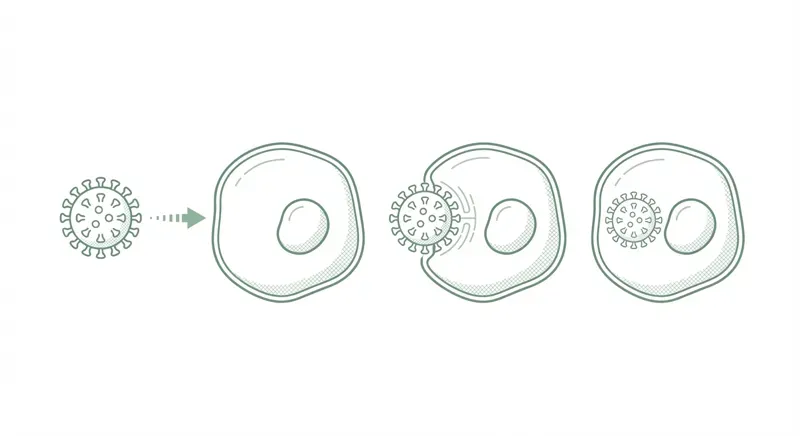
A virus is a kind of package containing genetic information (DNA or RNA), surrounded by a protective protein shell. The HPV virus has two strands of DNA and uses the human cell's DNA repair mechanism to multiply itself. The virus penetrates the human cell, inserts its own DNA, and begins to copy itself.
High-risk vs. low-risk types
The high-risk HPV viruses associated with cervical cancer are primarily HPV 16 and HPV 18. These types have a preference for the tissue of the cervix and cervical canal.
The HPV virus is found in 99.7% of cervical cancer cases. The virus therefore plays the central role. Low-risk types (such as HPV 6 and 11) can cause warts but do not lead to cancer.
How do you get HPV?
HPV is transmitted through sexual contact. A condom provides protection, but not completely; the virus can also be transmitted via skin-to-skin contact. Men are carriers of the virus and can transmit it without having any symptoms themselves.
It is important to know: HPV is so common that it is almost impossible to determine when or from whom you contracted the virus. It says nothing about your relationship or your behavior.
of all women will experience an HPV infection at some point. In most cases, the body clears the virus itself within 1-2 years.
Bron: RIVM
What happens in your body?
When the HPV virus enters the cells of the cervix, it can cause abnormal cells. This is a gradual process that progresses through different stages. The process from abnormal cells to the potential development of cervical cancer takes on average 10 to 15 years (depending on the immune system and the type of HPV virus). This long course underlines the great importance of timely detection and monitoring. It does not, however, mean that waiting without medical supervision is safe; regular standard screening and careful monitoring through your GP or gynecologist remain necessary in order to be able to act in time and appropriately.
The progression: from HPV infection to possible complications
HPV infection
The virus settles in the cells of the cervix.
CIN 1: Mild abnormalities
Superficial cell changes. The body can often clear this on its own.
CIN 2: Moderate abnormalities
With CIN 2, there are abnormalities deeper in the tissue. Although the body can repair this itself in some cases, careful assessment and active monitoring by a gynecologist is the standard for determining whether active treatment is needed. Monitoring by a doctor remains essential to prevent deterioration.
CIN 3: Severe abnormalities
A regular gynecological procedure in the hospital (such as a LEEP procedure or conization) is necessary here to prevent the cells from developing further. This is still a precancerous stage, not cancer.
Cervical cancer
Only occurs with long-term untreated severe abnormalities.
When does your body clear the virus itself?
In 80-85% of women, the immune system clears the HPV virus itself within 1-2 years. But in 15-20%, this happens slowly or not at all. This allows you to carry the virus for years without having symptoms. We then speak of a persistent HPV infection.
After infection with the HPV virus, CIN 1 and CIN 2 abnormalities can develop relatively quickly, after 2 to 3 years. Factors that play a role in whether or not the virus is cleared include: smoking, nutrition, genetic factors, the use of the contraceptive pill, and overall resistance.
Risk Factors
There are several factors that influence whether or not the HPV virus is cleared by your body:
- Smoking: Cervical cancer is more common in women who smoke. Smoking weakens the local immune defense.
- The contraceptive pill: Research has shown that the contraceptive pill can have a negative influence on HPV. An IUD seems to carry less risk for cervical cancer.
- Genetic factors: Some women have a genetic predisposition that makes it harder for the immune system to clear the virus.
- Nutrition and lifestyle: A well-functioning immune system is important for the overall resistance of the body. Factors such as a varied diet, specific supplements, and stress reduction can support overall immunity. Please note: lifestyle adjustments and supplements are always intended as general support and are not a replacement or alternative for the regular medical treatment or monitoring of HPV and CIN lesions.
- Disrupted acidity and infections: A healthy and balanced vaginal micro-environment (including an optimal acidity level) contributes to the natural barrier function of the tissue, which benefits overall local resistance.
PAP results explained
During a smear test, the cells of the cervix are assessed and classified according to the PAP system:
| Result | Meaning | Action |
|---|---|---|
| PAP 1 | Normal cells, no abnormalities | Regular check-up |
| PAP 2 | Mild abnormalities, often due to inflammation | Repeat smear test |
| PAP 3a | Mild to moderate abnormalities | Referral to gynecologist |
| PAP 3b | More abnormal cells | Referral to gynecologist |
| PAP 4 | Possible carcinoma in situ | Treatment by gynecologist |
| PAP 5 | Almost certainly cervical cancer | Treatment by gynecologist |
Read more about your situation
Click on what applies to you for more information
I have an abnormal smear test
What does this mean and what is the next step?
I have a PAP 3a result
The most common abnormal result explained
I tested HPV-positive
What to do after an HPV-positive result
HPV in men
The role of the partner and what he can do
HPV test
How is HPV tested and how reliable is the test?
Strengthening the immune system
What you can do yourself to fight HPV