
LEEP Procedure or Conization: Effectiveness, Risks, and Alternatives
A LEEP procedure removes the abnormal cells, but not always the virus. In 20-30% of women, HPV remains present after the procedure. What does that mean for you?
What is a LEEP procedure?
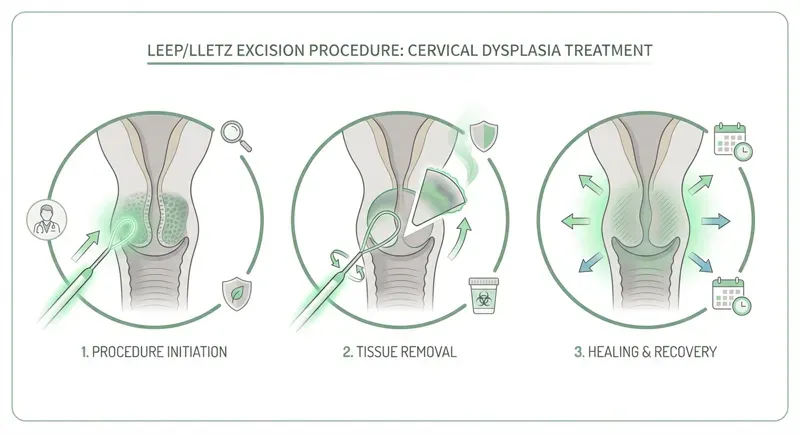
A LEEP procedure (also called a loop excision or LLETZ) is a surgical intervention where a thin electric wire (loop) is used to remove abnormal tissue from the cervix. it is the most commonly performed treatment for CIN 2 and CIN 3 in the Netherlands.
The procedure is usually performed under local anesthesia by a gynecologist. The removed tissue is sent to a laboratory for examination. The goal is to remove all abnormal cells at once.
For many women, the LEEP procedure is an effective treatment. However, it is important to understand that the procedure has limitations, particularly regarding the underlying HPV virus.
How effective is a LEEP procedure?
A LEEP procedure successfully removes abnormal cells in most cases. However, the statistics tell a more nuanced story than you might expect.
of the margins are not free of CIN and/or HPV viruses after a LEEP procedure. This was shown in a meta-analysis of 66 studies involving 35,000 women.
Bron: Meta-analysis, 66 studies, 35,000 women
This means that in nearly a quarter of women, the abnormal cells were not completely removed. The margins still contain CIN tissue, which increases the risk of recurrence.
positive margins after LEEP procedure in a 2020 study involving 1,000 patients.
Bron: 2020 Study, 1,000 patients
Effectiveness of LEEP procedure in figures
| Data | Percentage | Source |
|---|---|---|
| Positive margins | 11,2% | 2020 Study, 1,000 patients |
| Margins not free of CIN | 23% | Meta-analysis 66 studies, 35,000 women |
| HPV persistence after LEEP | 15% | Various studies |
| CIN2+ development after LEEP | 23% | Long-term follow-up |
Why does HPV return after a LEEP procedure?
A LEEP procedure removes the abnormal tissue, but not necessarily the HPV virus. The virus can be located in cells surrounding the treated area, in the vaginal wall, or elsewhere in the genital area. This explains why HPV can persist or return after a LEEP procedure.
risk that HPV remains present after a LEEP procedure. The virus is not only in the removed cells but can also be present in surrounding tissue.
The figures regarding HPV 16, the most aggressive HPV type, are particularly concerning:
of women who remained HPV 16-positive after a LEEP procedure experienced a CIN recurrence within 18 months. HPV 16 that remains present after treatment is a strong predictor of recurrence.
This emphasizes the importance of HPV monitoring after a LEEP procedure. Not only the tissue, but also the virus must be tracked. A negative check-up at the cellular level is not enough if the virus is still present.
Risks and consequences of a LEEP procedure
In addition to the risk of incomplete removal and HPV persistence, there are other consequences to consider:
- Scar tissue: The LEEP procedure leaves scar tissue on the cervix. This can reduce elasticity and cause issues during a potential pregnancy.
- Risk of preterm birth: Because tissue is removed from the cervix, the cervix can become shorter and weaker. This increases the risk of preterm birth in a future pregnancy.
- CIN recurrence: 23% of women develop CIN2+ after a LEEP procedure, despite the abnormal cells having been removed.
- Age as a risk factor: In women over the age of 35, the risk of abnormal cells returning after a LEEP procedure is nearly 5 times higher.
- Long-term follow-up required: After a LEEP procedure, you must be monitored for 10 years with regular check-ups.
greater is the risk of abnormal cell recurrence after a LEEP procedure in women over the age of 35.
Still HPV positive after LEEP: what now?
If you are still HPV-positive after a LEEP procedure, it is understandably frustrating. You have undergone a procedure, but the virus is not gone. This happens more often than you think, and it is important to know that follow-up steps are possible.
Action plan after LEEP with persistent HPV
Get a quantitative HPV test
Know which HPV type is still present and how high the viral load is. This determines the risk of recurrence. HPV 16 in particular requires extra alertness: a 94% chance of CIN recurrence within 18 months.
Strengthen your immune system specifically
After a LEEP procedure, it is extra important to support your immune system. Targeted supplements, proper nutrition, and stress reduction help your body clear the remaining virus.
Eliminate risk factors
Quit smoking, reconsider the contraceptive pill, and reduce stress. These factors make it harder for the body to clear HPV after the procedure.
Consider escharotic treatment
Escharotic treatment can be used supplementally after a LEEP procedure. It treats any remaining abnormal tissue and can also improve scar tissue from the previous intervention.
Have your partner tested
Reinfection via your partner can be a reason why HPV returns after a LEEP procedure. A semen and penis test provides clarity.
Monitor regularly
After a LEEP procedure, you must be followed for 10 years. Monitor not just the cell morphology, but also the viral load via a quantitative HPV test.
Alternatives to the LEEP procedure
The LEEP procedure is not the only option. Depending on your situation, there may be alternatives:
- Escharotic treatment: A non-invasive treatment that targets and removes abnormal cells without leaving scar tissue. Particularly suitable for CIN 1 and early CIN 2, and as a supplement after a LEEP procedure.
- Immunotherapy: Targeted strengthening of the immune system through supplements, nutrition, and lifestyle adjustments to clear the virus.
- Combined approach: At HPV Health, we combine multiple approaches for the best result: local treatment, immune support, and monitoring.
Important: escharotic treatment is not a replacement for a LEEP procedure in cases of severe abnormalities that require immediate removal. It is a supplemental or alternative approach depending on the severity and stage of the abnormalities.
Still HPV positive after LEEP? Or looking for an alternative?
At HPV Health, we help women who are still HPV-positive after a LEEP procedure, or who are looking for an alternative approach. With comprehensive diagnostics and a customized treatment plan, we work on clearing the virus.
Schedule an intake consultationLEEP procedure vs. escharotic treatment
Treatment comparison
| Feature | LEEP procedure or conization | Escharotic treatment |
|---|---|---|
| Method | Surgical (electric loop) | Local application of tincture |
| Anesthesia | Local anesthesia required | Not required |
| Scar tissue | Yes | Usually none |
| Impact on desire to have children | Risk of preterm birth | Usually no adverse effect on the cervix |
| HPV virus approach | Not direct | Supportive via immune system |
| Recovery time | Several weeks | None |
| Suitable for | CIN 2/3, severe abnormalities | CIN 1, early CIN 2, post-LEEP |
Veelgestelde vragen
How long does recovery take after a LEEP procedure?
Can I still get pregnant after a LEEP procedure?
How likely is CIN to return after a LEEP procedure?
Do I still need check-ups after a LEEP procedure?
Can escharotic treatment be used after a previous LEEP procedure?
Ready for the next step?
Schedule an intake and discover which holistic treatment suits you best.
Schedule an intake